


November 2026 Product
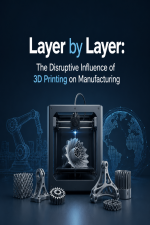
Layer by Layer
The Disruptive Influence of 3D Printing on Manufacturing
The advent of 3D printing technology has heralded a new era in the manufacturing industry, significantly altering how products are designed, produced, and distributed. Known for its potential to revolutionize traditional manufacturing processes, 3D printing, or additive manufacturing, allows for the creation of complex structures layer by layer from digital models. This eBook delves into the transformative influence of 3D printing, examining its benefits, challenges, and implications for the future of manufacturing.
Understanding 3D Printing Technology
3D printing encompasses various technologies that utilize additive processes to create objects. The most common methods include Fused Deposition Modeling (FDM), Stereolithography (SLA), and Selective Laser Sintering (SLS). Each of these techniques employs different materials and processes, yielding diverse applications across multiple industries. From prototyping to full-scale production, 3D printing presents a versatile approach to manufacturing.
Advantages of 3D Printing in Manufacturing
- Design Flexibility: One of the primary advantages of 3D printing is its ability to produce complex geometries that would be impossible or cost-prohibitive with traditional manufacturing methods. Designers can create intricate shapes and structures, facilitating innovation in product development.
- Reduced Waste: Unlike subtractive manufacturing, which often involves cutting away material, 3D printing uses only the material necessary to create the object. This leads to less waste and a more sustainable manufacturing process.
- Shortened Lead Times: 3D printing can significantly reduce the time from design to production. Rapid prototyping allows manufacturers to test and iterate designs quickly, leading to faster market entry.
- Customization: The technology enables mass customization, allowing manufacturers to produce unique products tailored to individual customer specifications without the need for extensive retooling or setup changes.
- Cost-Effectiveness: For low-volume production runs, 3D printing can be more cost-effective than traditional methods, as it eliminates the need for expensive molds and tooling.
Challenges and Limitations
Despite its numerous advantages, 3D printing is not without challenges. Some of the notable limitations include:
- Material Limitations: While the range of materials suitable for 3D printing is expanding, it remains limited compared to traditional manufacturing methods. Certain applications may still require materials that are not yet compatible with 3D printing technology.
- Quality Control: Achieving consistent quality across printed objects can be challenging. Variability in process parameters can lead to defects, requiring rigorous quality control measures.
- Regulatory Hurdles: Industries such as aerospace and healthcare face stringent regulations that can complicate the adoption of 3D printing. Compliance with safety and quality standards is critical, often necessitating extensive testing and validation.
- Intellectual Property Concerns: The ability to easily replicate designs raises concerns regarding intellectual property rights. Manufacturers must navigate the complexities of copyright and patent laws in the context of 3D printing.
The Future of 3D Printing in Manufacturing
The future of 3D printing in manufacturing appears promising, with ongoing advancements in technology and materials. As the industry matures, several trends are emerging:
- Increased Automation: The integration of automation and artificial intelligence in 3D printing processes is anticipated to enhance efficiency and precision, further streamlining production.
- Expansion into New Industries: Sectors such as construction, automotive, and healthcare are increasingly exploring the potential of 3D printing, leading to innovative applications and uses.
- Sustainability Initiatives: With growing concerns around environmental impact, 3D printing is poised to play a significant role in promoting sustainable manufacturing practices through reduced waste and resource efficiency.
In conclusion, 3D printing represents a pivotal shift in manufacturing paradigms, offering numerous advantages while posing certain challenges. As technology evolves, its influence on the manufacturing landscape is expected to deepen, shaping the future of production across various industries.
Access This eBook and a Growing Digital Product Library
This eBook is included with the Master Resale Rights Club membership. Members receive access to thousands of Master Resale Rights ebooks and digital resources, with new products being added to the library regularly.
Whether you are looking to:
- Resell digital products and keep 100% of the profits
- Build your own digital product collection
- Offer bonuses to your customers or subscribers
- Provide additional value to your membership site members
our growing library can help you expand your content offerings without creating everything from scratch.
Premium Membership
Get instant access to this eBook plus 3700+ digital products for a single low yearly fee.
Join Membership – $37 / YearFree Membership
Want to explore the library first? Join our free membership and receive a selection of complimentary MRR ebooks while staying informed about new product additions.
Create Free AccountFranchisee Access
Website owners and platform builders can offer products from our library directly on their own websites through our API-powered Franchisee program, without manually downloading, uploading, or managing files.
Explore Franchisee Access – $25 / MonthNot sure which option is right? Membership is ideal for individuals and resellers. Franchisee access is designed for website owners and businesses.
Product Generation Note: This eBook was researched and drafted using advanced Artificial Intelligence (AI) and curated by the Master Resale Rights Club editorial team. We use AI to provide our members with the most current 2026 market insights and high-frequency content updates while maintaining our standard of quality.